Britain is skeptical of Farage's Clacton by-election, but Reform supporters aren't

Nigel Farage says he's giving up his Clacton seat so voters can judge him directly. The timing suggests that he might be stepping down and standing again just as the Parliamentary Commissioner for Standards investigates an undeclared £5 million gift from crypto investor Christopher Harborne, alongside a second thread reported by the Sunday Times, undisclosed support from George Cottrell allegedly covering Farage's security, drivers and accommodation. Farage's line is that the Harborne money was a personal gift, that no rules were broken, and that he has nothing to hide. His political opponents aren't buying it. Keir Starmer called the whole exercise a "desperate stunt," Kemi Badenoch a "fake by-election."
The strange part is that nobody except Farage seems to actually want this fight. Labour, the Conservatives, the Lib Dems, the Greens and Restore Britain have all said they won't contest Clacton. As things stand, Farage's main opponent is the satirical candidate Count Binface.
Prolific ran a snap poll of 1,174 UK adults on 7-8 July, right after Farage's announcement, to see how the public is actually reading this. Short answer, they don't buy his story, they think he probably did do something wrong, and, contrary to what is happening, they want the exact fight the other parties are refusing to give them.
The public isn't buying the "let voters judge me" line
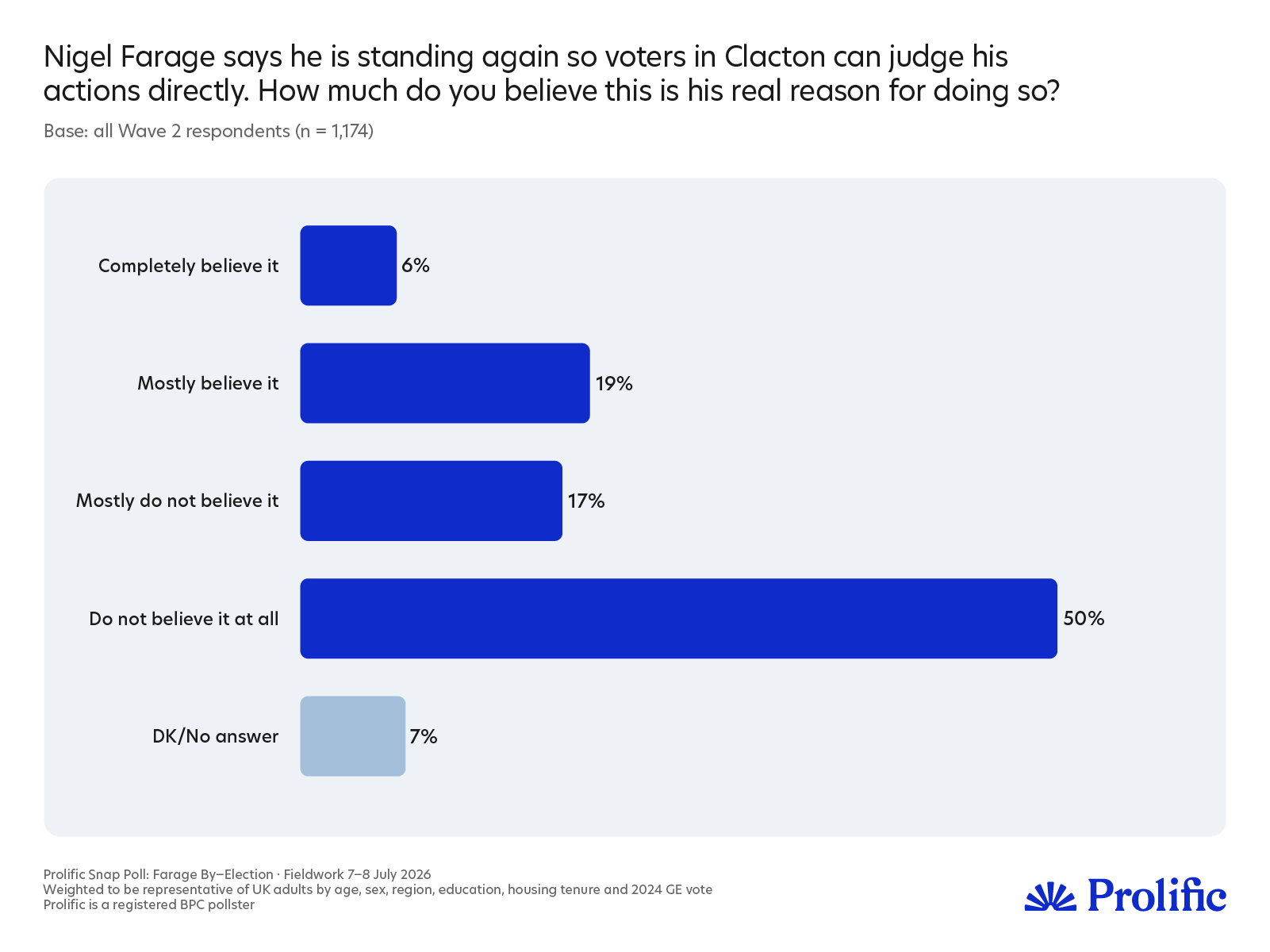
Farage's own explanation is that standing again lets Clacton judge his conduct directly. The public disagrees, with only 25% said they mostly or completely believe that's his real reason, while 67% said they don't, including a full 50% who don't believe it at all.
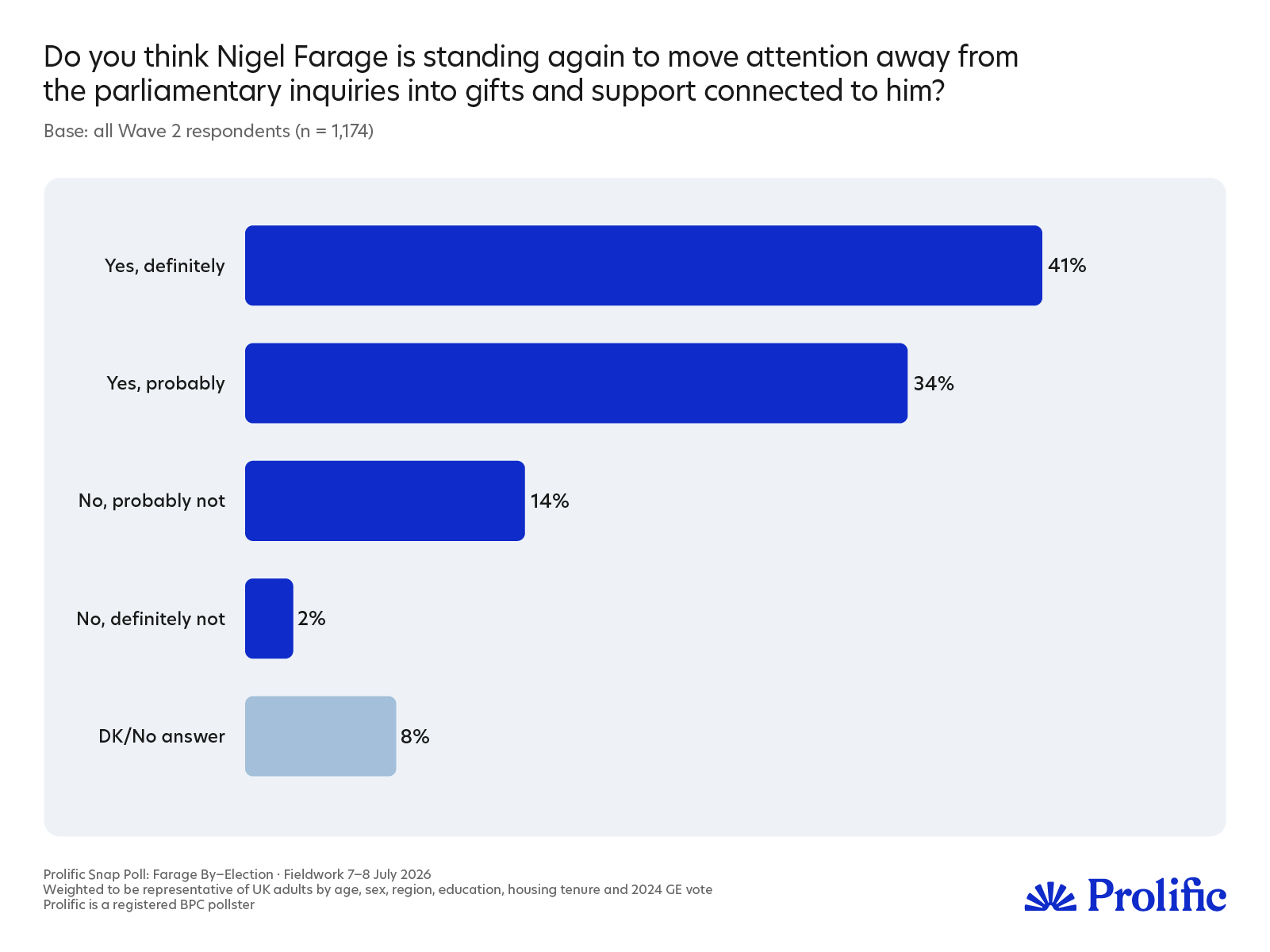
Pushed further, 86% said they think Farage is standing again specifically to take control of the story before others define it, and 75% said they think it's a move to shift attention away from the parliamentary inquiries. Those aren't close calls, with only 7% disagreed with the "control the story" framing, and only 16% disagreed with the "distraction" framing.
But the "right or wrong" question is split
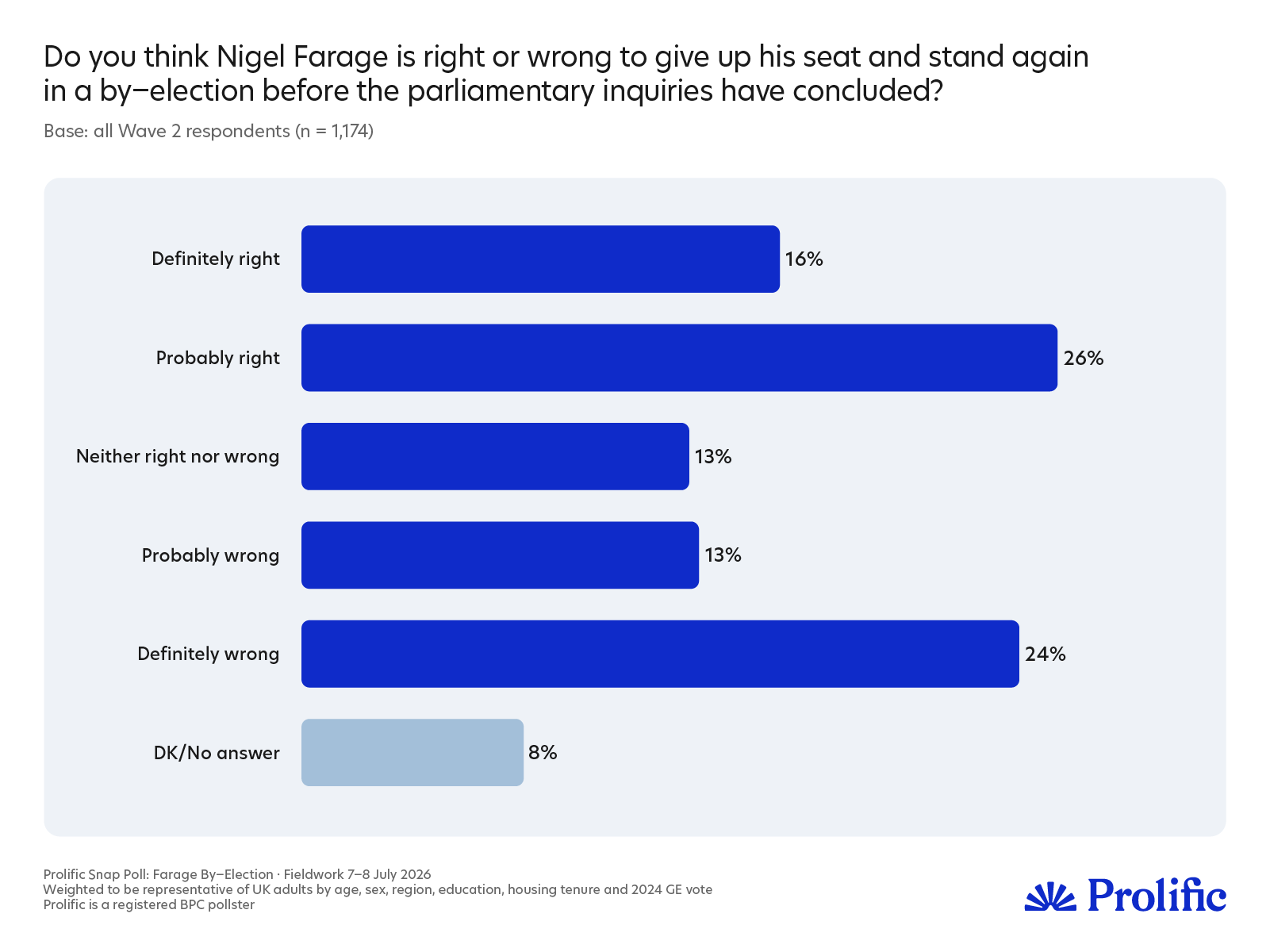
Despite the skepticism about Farage’s motive, the country doesn't cleanly condemn the decision itself. Asked whether Farage was right or wrong to call the by-election before the inquiries concluded, 42% said probably or definitely right, against 38% probably or definitely wrong, inside the margin of error on a sample this size. While the public does not buy the reasons behind it, most of them want to see Farage stepping down to run again.
Most people think he probably did something wrong
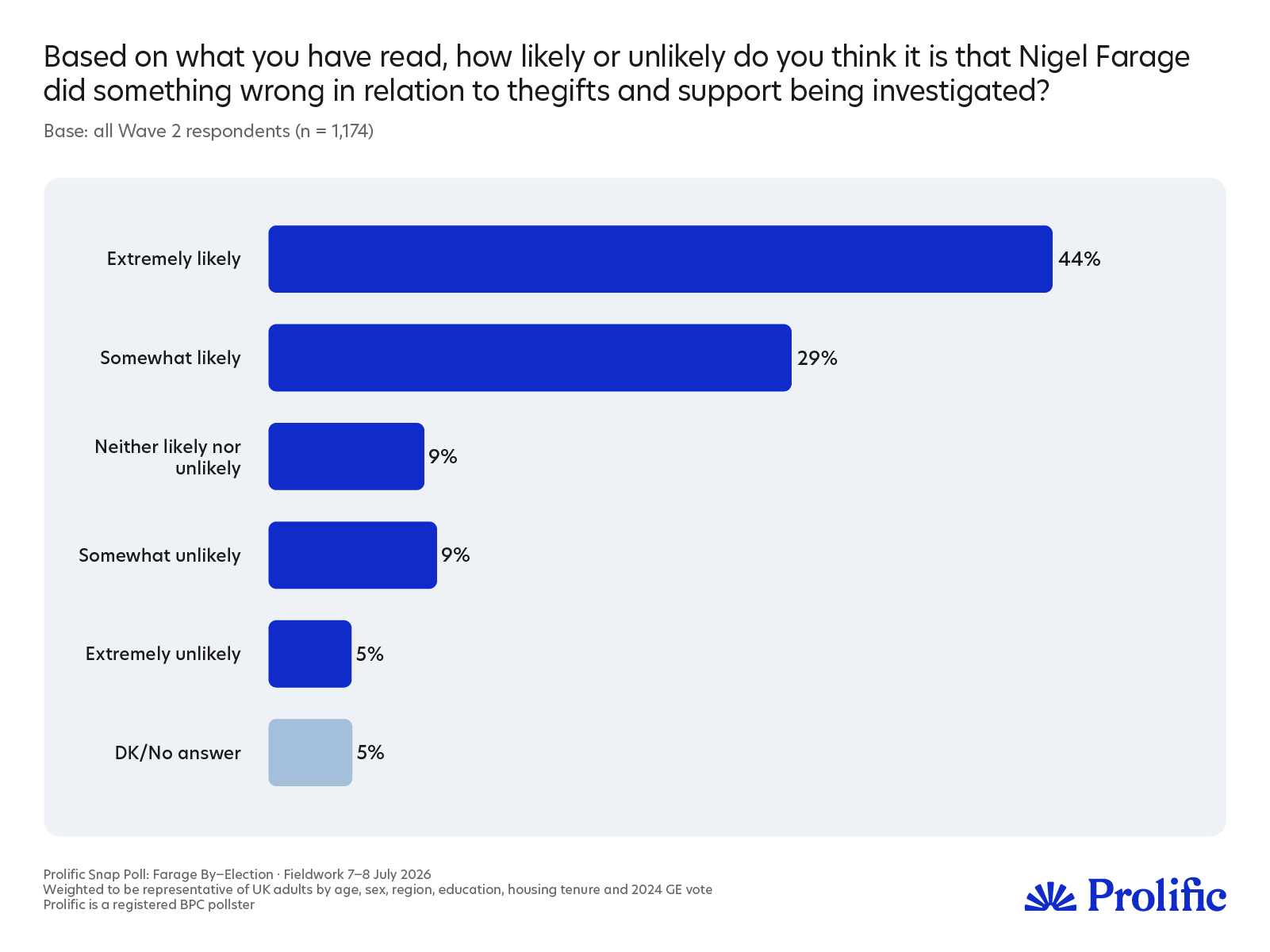
On the substance of the investigation itself, the numbers are much less ambiguous, 73% said it's somewhat or extremely likely Farage did something wrong regarding the gifts and support being investigated, against 14% who called it unlikely.
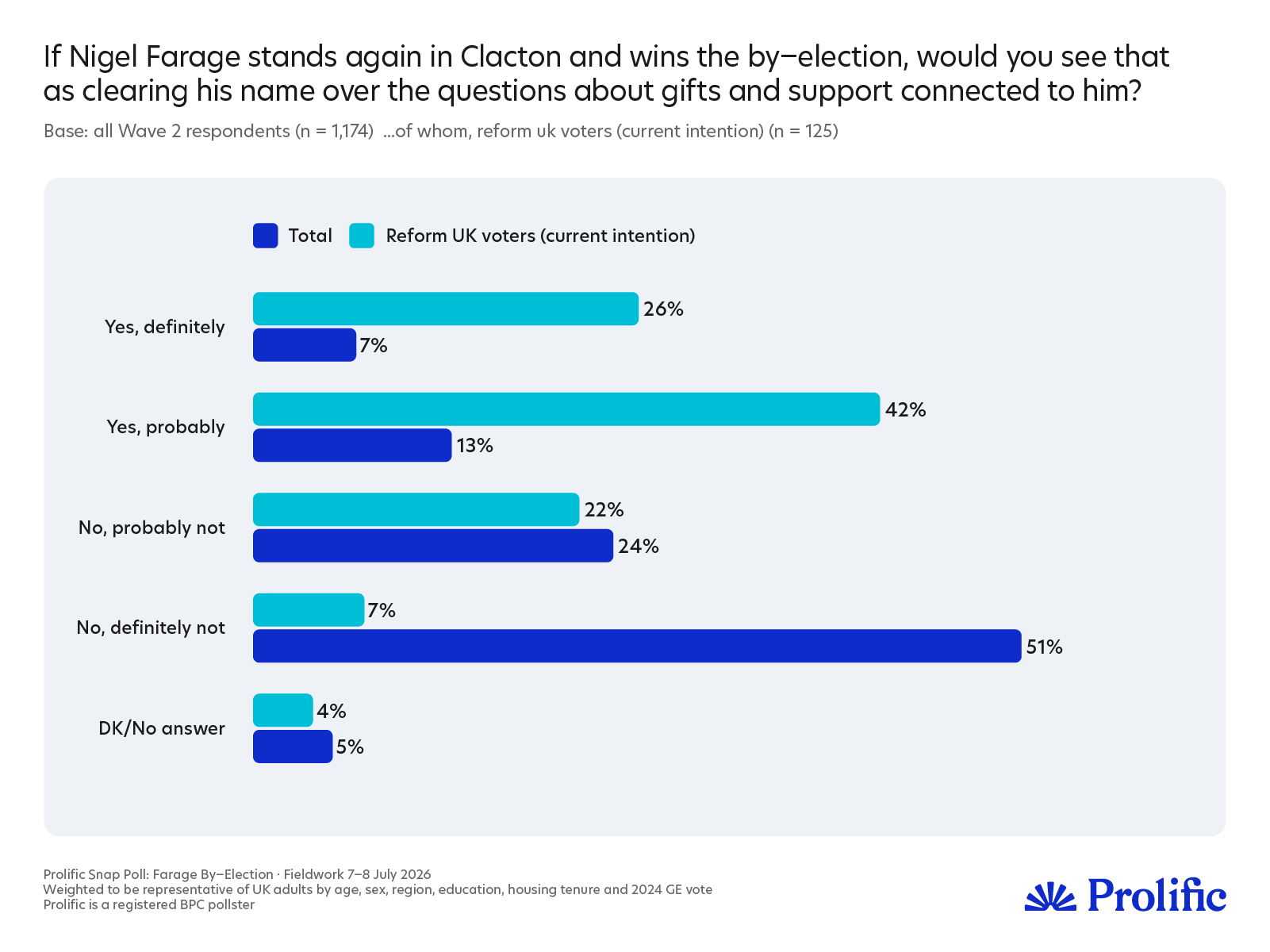
And on the theory that winning the by-election would settle the matter, the public does not believe so. Only 20% said a Clacton win would clear Farage's name over the gifts questions; 75% said no.
Reform's own supports see things very differently
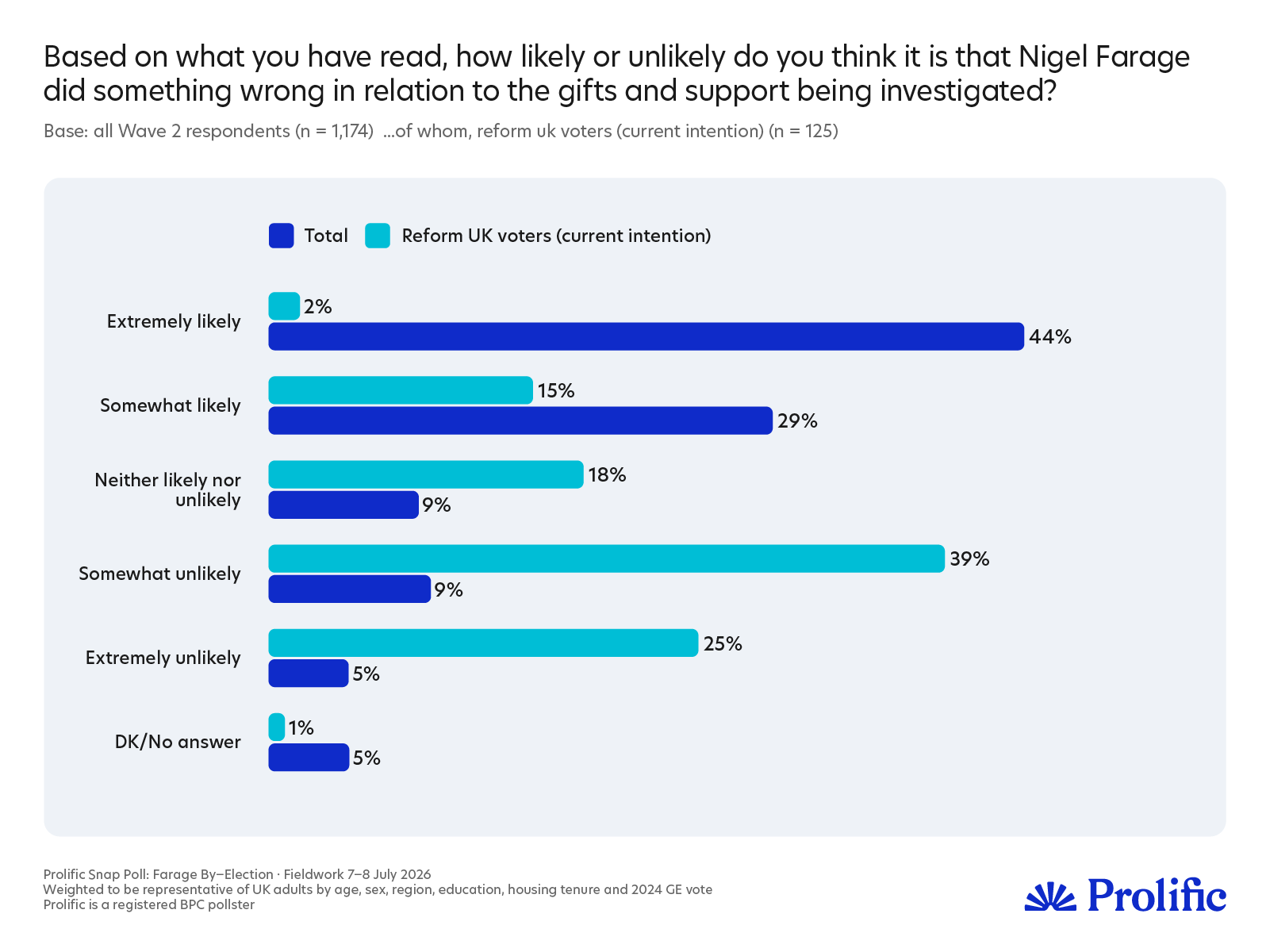
Split the sample by current Reform UK voting intention and the story changes completely. Among those who currently lean Reform, 84% believe Farage's stated reason for standing again (versus 25% of the full sample). Only 40% think the by-election is a distraction from the inquiries, versus 75% overall. And only 17% think it's likely he did something wrong, versus 73% overall.
Reform supporters also believe that if Farage were to win, this should clear his name: 68% of Reform voters say yes, it would, versus 20% of everyone else. That doesn’t appear to be a gap in how people are reading the evidence, but rather the kind of proof they're each looking for.
The public wants the fight the parties won't give them
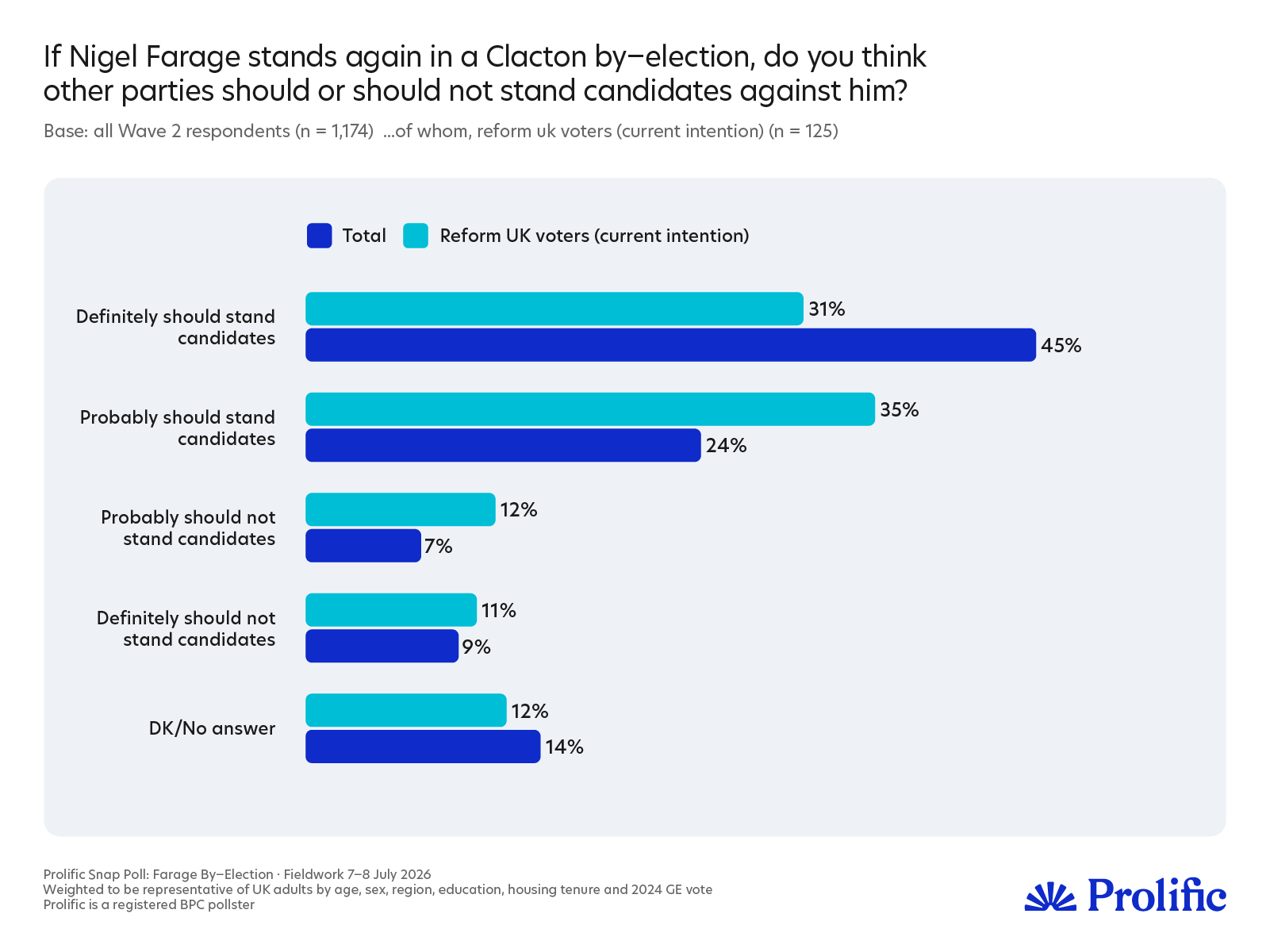
This is where the real-world politics and the poll numbers collide. We asked whether other parties should stand candidates against Farage in Clacton: 69% said they should (45% definitely, 24% probably), against just 16% who said they shouldn't. Even among Reform's own voters, a 66% majority thinks other parties should stand against their own leader.
And yet Labour, the Conservatives, the Lib Dems, the Greens and Restore Britain have all taken a pass. Whatever calculation each party is making about not wanting to legitimize the contest, or not wanting to hand Farage a soft target to beat, the public disagrees with them. Voters, by a wide margin, want a real race. They're not getting one.
Reform's downside here looks smaller than it should
Last point, and it matters for how much any of this actually threatens Farage or Reform UK. We asked Reform-leaning respondents specifically, if Farage stands again and loses, would that make you more or less likely to vote Reform at the next general election? 25% said more likely, 11% said less likely, and 60% said no difference.
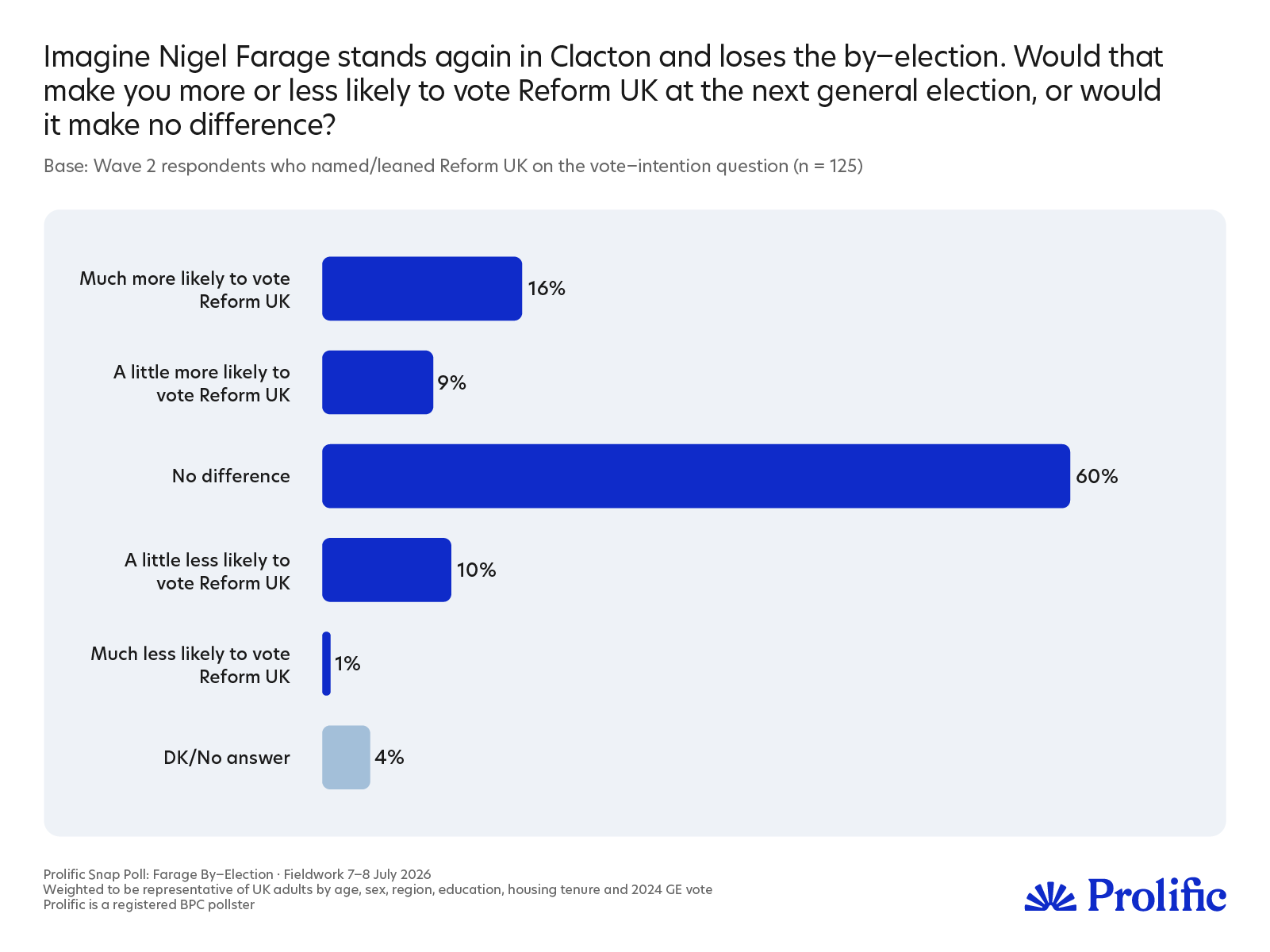
In other words, even a loss in Clacton is more likely to consolidate Reform's base than crack it. However, we have not accounted for losing against Count Binface, an unlikely but more damaging scenario.
Combined with everything above, this looks less like a referendum on Farage's conduct and more like a low-risk bet. The public doesn't believe him, thinks he probably did something wrong, and would welcome a real contest, but none of that seems to translate into real exposure for Farage among the voters who actually matter to his future.
Methodology: Prolific surveyed 1,174 UK adults on 7-8 July 2026, weighted to the UK adult population on age, sex, region, education, housing tenure and 2024 general election vote. The margin of error is roughly ±4 points on a 50% figure. The Reform UK subgroup (current voting intention, n=125) has a wider margin of error given its smaller size; treat those splits as indicative rather than precise. Prolific is a registered BPC pollster.
To dig deeper into these figures, you can explore the results through by downloading the cross-tabulation tables to conduct your own analysis.